Quick Contact +91-11-25842122


 ICAR - Central Institute of Agricultural Engineering (CIAE)
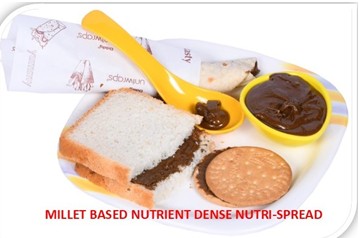
Process Technology for Preparation of Millet based Nutrient Dense Nutri-Spread
Background
The demand for nutridense food is driven by the need for health, convenience, sustainability, and targeted nutrition across different age groups and lifestyle needs. Market trends indicate continued growth in this sector, especially with the increasing focus on wellness and preventive healthcare. Majority of spread and spread-like foods face several drawbacks despite their convenience and popularity. Health concerns are significant, as many spreads contain high levels of unhealthy fats, added sugars, and sodium, contributing to obesity, heart disease, and other metabolic disorders. Additionally, the use of artificial additives, preservatives, and emulsifiers in many spreads raises concerns among health-conscious consumers. Nutritionally, many spreads offer little value beyond calories and fat, lacking essential nutrients. While healthier and natural spreads exist, they often come at a higher price and have shorter shelf lives.
Technology Details
A nutri spread developed from fermented millets, green gram, peanut, soymilk powder, edible oil, sugar, salt, and cocoa powder addresses key issues associated with conventional spreads. Its nutrient-dense composition, rich in protein, vitamins, and minerals, offers a healthier alternative to traditional fat- and sugar-heavy spreads. Fermentation enhances the digestibility of millets by breaking down anti-nutrients and introduces probiotics, promoting better gut health. The use of edible oil ensures healthier fats, while soymilk powder provides a plant-based protein source, making the spread suitable for lactose-intolerant and vegan consumers. Additionally, the balanced flavor from cocoa powder and peanuts reduces the need for excessive sugar, contributing to a lower-calorie option. The spread’s ingredients, such as millets and peanuts, are sustainable and eco-friendly, aligning with growing consumer demand for ethical and environmentally conscious products. Overall, this spread offers improved nutrition, better digestibility, and a healthier, more sustainable alternative to conventional spreads.