Quick Contact +91-11-25842122


 ICAR - Central Institute of Agricultural Engineering (CIAE)
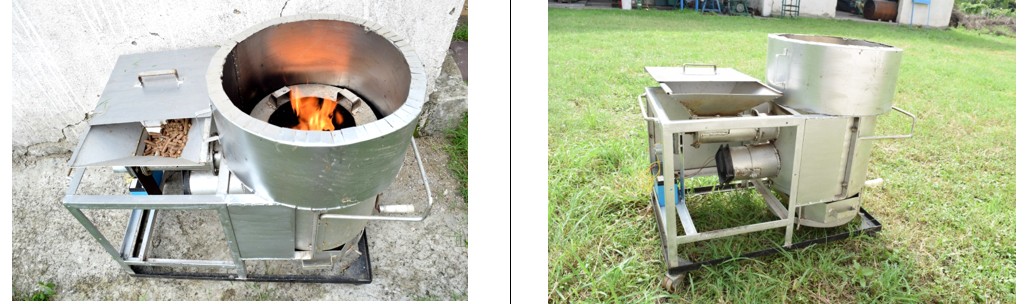
ICAR-CIAE Battery operated biomass briquette based rapid combustion system
Background
The increasing scarcity and rising cost of conventional fossil fuels, particularly Liquefied Petroleum Gas (LPG), have created significant challenges for domestic cooking energy security, especially in rural and semi-urban areas. India generates a substantial quantity of agricultural residues, much of which remains underutilized or is disposed of through open burning, contributing to air pollution and loss of valuable energy resources. Biomass briquettes, produced from such residues, offer a cleaner, denser, and more efficient alternative fuel. However, the lack of appropriate combustion devices that can effectively utilize briquettes while providing controlled and efficient heat output limits their widespread adoption. Conventional biomass chulhas generally lack mechanisms for regulating heat generation, resulting in poor combustion efficiency, higher fuel consumption, and user inconvenience. Therefore, an improved biomass briquette-based chulha equipped with a heat control mechanism was developed that ensures efficient combustion, reduced emissions, which is portable, energy self-sufficient, and user-friendly operation. Such a system can serve as a sustainable and cost-effective alternative to LPG, addressing both energy and environmental challenges.
Technology Details
A biomass briquette-based rapid combustion system of up to 8 kW capacity has been developed for thermal applications, suitable for small-scale agro-industries, restaurants, community cooking, and domestic use. The system uses biomass briquettes as a renewable alternative to LPG or coal and includes provision for heat control; it is portable, forced draft, and of continuous fuel feeding type, allowing heat output to be varied through regulation of fuel and air supply. When retrofitted with a soy paneer plant, the cost of production per kg of paneer was reduced by 36% compared to LPG. The developed unit has a thermal efficiency in the range of 38–41% with a specific briquette fuel consumption of about 0.45 kg/kW. It incorporates DC components, making it battery-operated and low cost. Emissions from the system showed a CO/CO₂ ratio of 0.032 and suspended particulate matter of 0.068 mg/m³, which are within acceptable BIS limits, making it environmentally friendly. The maximum body temperature observed was 45–51°C, which is within the safety range. Overall, the crop residue briquette-based system is highly convenient and has strong potential to reduce dependence on conventional fuels at rural, domestic, and industrial levels, while offering good stability, safety, and reduced emissions.


